

What Readers Should Know
PLDT Enterprise held cybersecurity awareness engagements for business, military, government, and international learning audiences during October. Sessions focused on impersonation, phishing, AI-enabled fraud, and practical response habits.
Key Takeaways
- CCEAP hosted a resilience briefing on October 6.
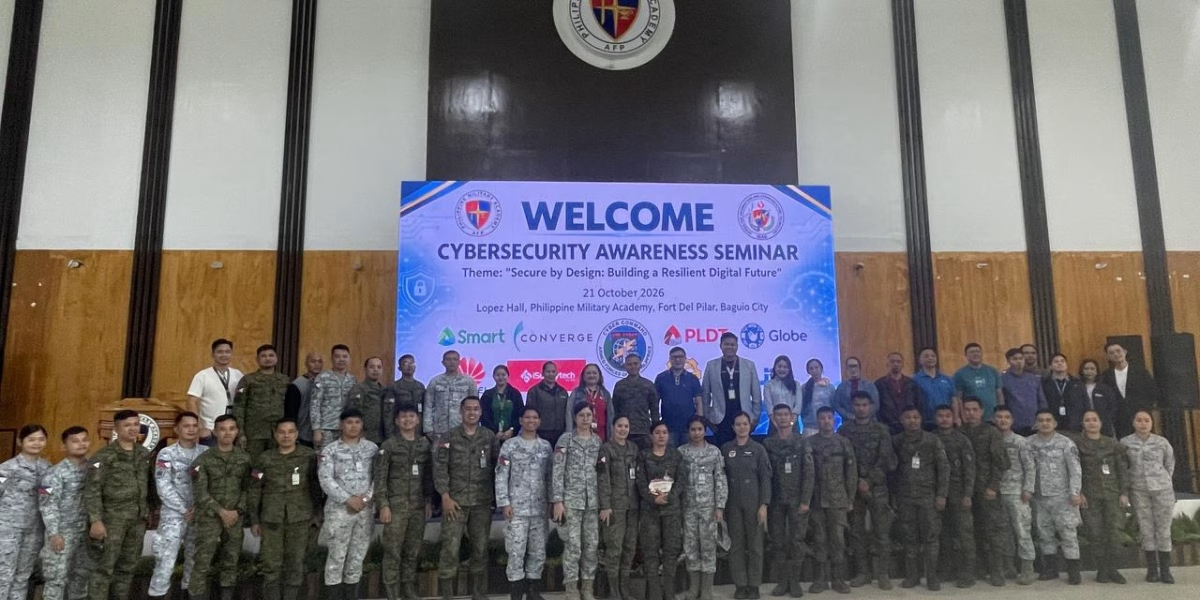
- The Philippine Military Academy workshop took place on October 21.
- Sessions addressed deepfakes, phishing, and social engineering.
- An Institute of Data engagement reached an international learning community.
- Workshops emphasized verification, credential protection, and prompt reporting.
October sessions focused on recognizing impersonation, questioning unusual requests, and reporting potential threats.
PLDT Enterprise brought cybersecurity discussions to business, military, and government audiences during October, focusing on the everyday decisions that can help organizations respond to AI-enabled fraud.
The engagements covered phishing, social engineering, executive impersonation, deepfakes, and risks involving personal accounts and digital devices.
The central message was that cybersecurity awareness needs to extend beyond IT teams.
Making Threats Relevant to Daily Work
On October 6, PLDT Enterprise supported a Digital and Cyber Resilience briefing for Coca-Cola Europacific Aboitiz Philippines.
Led by Alexis C. Bernardino, principal CXO advisor and field CISO at PLDT Enterprise, the session examined emerging threats and how convincing fraudulent messages can exploit trust.
CCEAP chief information officer Winnie T. Rebancos said helping employees recognize and respond to digital threats is part of protecting both operations and the trust placed in the business.
On October 21, PLDT Enterprise conducted a Cyber Awareness Workshop at the Philippine Military Academy in Baguio City.
The discussion addressed risks relevant to academic and military environments, including suspicious communications and impersonation involving digital tools.
Practical safeguards included verifying unusual requests through trusted channels, protecting credentials, and reporting potential incidents promptly.
Extending the Conversation
PLDT Enterprise also conducted an online practitioner session with the Institute of Data, reaching a learning community spanning New Zealand, Australia, and Singapore.
Additional Digital and Cyber Resilience Workshops involved defense and law enforcement audiences, including the Department of National Defense, Philippine Army, and Philippine National Police.
Those discussions considered how criminals can misuse the perceived authority of officials and institutions to make fraudulent requests appear legitimate.
Across the sessions, PLDT Enterprise emphasized a role for employees and leaders alongside technical controls: recognizing when something looks wrong and knowing what to do next.
As organizations introduce more AI tools, that awareness remains relevant to ordinary workplace interactions—from a message requesting sensitive information to an unexpected instruction apparently coming from a senior official.
Frequently Asked Questions
Who led the highlighted briefings?
Alexis C. Bernardino, PLDT Enterprise principal CXO advisor and field CISO.
What threats were discussed?
Phishing, impersonation, social engineering, deepfakes, and AI-powered fraud.
When was the PMA workshop held?
October 21, in Baguio City.
What practical habits were emphasized?
Verifying unusual requests, protecting sensitive credentials, and reporting suspicious activity.
Were the sessions limited to Philippine audiences?
No. An online Institute of Data session also involved learners across New Zealand, Australia, and Singapore.


Gabriel
Introvert, wanderer, blogger, foodie, a hip-hop music writer, and one of the co-founders of a tech start-up company called GigsManila.
Related Articles
More by category, author, or tags
TCL Expands Tablet Lineup with Nxtpaper Models for Reading and Productivity
Add as a preferredsource on GoogleFind this story on GoogleTCL Expands Tablet Lineup with Nxtpaper Models for Reading and Productivitygoogle.com · Opens...

Maya Crypto Raffle Offers ₱1 Million Grand Prize Through December Promo
Add as a preferredsource on GoogleFind this story on GoogleMaya Crypto Raffle Offers ₱1 Million Grand Prize Through December Promogoogle.com · Opens...

HONOR Play 20A Gets ₱8,099 Shopee Offer Ahead of Nationwide Launch
Add as a preferredsource on GoogleFind this story on GoogleHONOR Play 20A Gets ₱8,099 Shopee Offer Ahead of Nationwide Launchgoogle.com · Opens...

HONOR Pad X7B Gets ₱8,999 Early Offer on TikTok Shop
Add as a preferredsource on GoogleFind this story on GoogleHONOR Pad X7B Gets ₱8,999 Early Offer on TikTok Shopgoogle.com · Opens in...

Sophos Adds AI Service Controls and Coordinated Network Defense Tools
Add as a preferredsource on GoogleFind this story on GoogleSophos Adds AI Service Controls and Coordinated Network Defense Toolsgoogle.com · Opens in...

Zyxel and Bitdefender Bring Network and Endpoint Visibility into One Dashboard
Add as a preferredsource on GoogleFind this story on GoogleZyxel and Bitdefender Bring Network and Endpoint Visibility into One Dashboardgoogle.com · Opens...